Foundries Need Better Inspection History, Not Just More Maintenance
Key Highlights
- Fragmented maintenance data hampers the ability to identify recurring issues and improve reliability in foundries.
- Connecting inspection records to specific assets and maintaining detailed histories enables better troubleshooting and decision-making.
- Standardizing defect descriptions and closure notes enhances trend analysis and helps prevent repeat failures.
- Trend visibility in equipment deterioration supports proactive maintenance, reducing unexpected downtime and safety hazards.
- Preparing structured, linked data is essential for leveraging AI tools to optimize maintenance planning and asset management.
Metalcasting operations’ maintenance problems typically are not due to a lack of information. They stem from a lack of insight. Foundry maintenance operators struggle because the information they collect is too fragmented to show what is really happening across the plant.
A dust collector may require another filter change. An exhaust fan may show the effects of vibration, again. The performance of a cooling-water pump may decline during a high-volume run. A conveyor supporting a shakeout may need another adjustment. Shot-blast systems may show repeated wear. Each one of these issues may be handled as routine maintenance, but repeated findings often point to a larger, reliability problem.
In metalcasting operations, equipment condition is affected by heat, abrasive sand, dust, vibration, moisture, thermal cycling, heavy loads, and production pressure. These conditions make individual inspection notes useful, but asset history gives those notes meaning. When inspection findings, corrective actions, photos, and repair records are compiled over time, maintenance teams can see which issues are isolated and which keep recurring.
That distinction matters. A one-time pump problem may only require a repair. A pump that repeatedly loses flow after high-temperature production periods may require a deeper review of seals, bearings, cooling-water quality, suction conditions, or maintenance intervals. A single dust-collector alarm may be corrected quickly. Repeated dust collector alarms around the same process area may point to airflow, duct loading, filter condition, capture velocity, cleaning cycles, or production changes.
For foundries, better inspection history is not about collecting more data. It is about making existing records useful enough to support maintenance decisions, safety planning, downtime reduction, and future reliability improvements.
Recurring problems often look routine
Foundry maintenance teams are used to repeat work. The environment almost guarantees it. Sand handling systems wear. Conveyors stretch and misalign. Fans operate in dusty or high-temperature areas. Pumps handle cooling water, washdown water, hydraulic fluids, or process fluids under changing conditions. Dust collectors require steady attention. Cranes, hoists, ladles, furnaces, molding lines, coremaking equipment, and shot-blast machines operate under stress, too.
The problem is not the repeat work; the problem is when the patterns of that repeat work is not recognized.
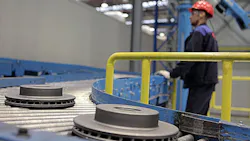
Consider a conveyor feeding a shakeout or sand-return system. A single belt-tracking adjustment may be routine. If the same conveyor requires adjustment every few weeks, the issue may involve a pulley condition, uneven loading, structural failure, material build-up, belt wear, or operating practice. If any of those details are recorded as separate work orders, the plant may continue to make adjustments without addressing the reason the belt keeps drifting.
The same is true for dust collection. A foundry may replace filters, clear ducting, or respond to alarms without connecting those events to a longer history. If the same collection point or duct branch repeatedly shows poor performance, the issue may involve capture design, airflow balance, filter loading, hood condition, damper position, housekeeping, or a production change that increased particulate load.
In each case the maintenance action may be correct at the moment: The higher goal is reachable by recognizing whether the problem keeps returning.
Inspection records need asset-level context
A completed inspection checklist proves that a task was performed. It does not always help the next technician understand what problem was found, what changed, or whether the condition has appeared before.
For a foundry, an effective inspection record should connect the finding to the specific asset, location, component, observed condition, severity, corrective action, and follow-up result. A note saying “fan checked” or “pump repaired” may close a task, but it will not provide sufficient context for future troubleshooting.
A stronger record might show that an exhaust fan serving a grinding or finishing area had abnormal vibration, that the vibration was observed at a specific bearing location, that build-up was found on the wheel, that bearings were inspected, that cleaning was completed, and that vibration returned two months later. That history would change the maintenance conversation: No longer would the issue be just a fan repair. It may be an airflow, balance, bearing, dust-loading, access, cleaning frequency, or operating-condition issue.
The same applies to pumps supporting cooling water or washdown systems. If a pump’s performance repeatedly declines during heavy production, the record should show when the issue occurred, the current operating conditions, whether strainers were checked, whether cavitation was suspected, whether seals or bearings were replaced, and whether the issue returned.
Without that history, the foundry may keep treating the symptom instead of reviewing the operating pattern.
Inspection records become more useful when condition ratings, defect records, corrective action outcomes, photos, reports, and maintenance activities remain connected to the asset record over time. A centralized approach to inspection data management can help organize findings, asset condition history, corrective actions, and inspection records so teams can review asset condition across inspection cycles.
The important point is not simply that records are digital: The value is that they remain linked to the asset and are easy to compare over time.
Corrective actions should close the loop
Corrective action is the point at which many maintenance programs lose important context. A defect is found, a repair is assigned, and the task is closed. But closure may not prove that the underlying condition has been resolved.
In metalcasting operations, that condition may reoccur under load, after exposure to heat, after abrasive build-up accumulates again, or after production shifts to a different casting mix. A repair that looks successful during downtime may not hold under actual operating conditions.
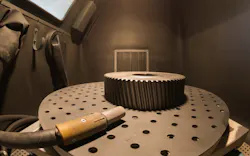
For example, a shot-blast machine may be repaired for worn liners, wheel components, or media leakage. If every repair is treated separately, the plant may miss a pattern involving operating hours, media condition, part mix, loading practice, or inspection interval. A molding line sensor may be cleaned or replaced several times without reviewing whether dust, heat, vibration, or shielding is causing repeated failures. A furnace-area hoist may show recurring wear findings that should be reviewed in connection with duty cycle, load handling, lubrication, and inspection frequency.
A useful corrective-action record should show what was found, what was done, who completed the work, whether parts were replaced, whether the repair was verified under operating conditions, and whether follow-up inspection is needed. If the same condition had appeared before, that should be visible.
This feedback loop is especially important for assets that consume maintenance time without creating immediate shutdowns. Such assets may not receive the same attention as major breakdowns, but they can affect uptime, safety, housekeeping, environmental performance, and labor planning over time.
High-wear environments need better trend visibility
Metalcasting production equipment often deteriorates gradually. Abrasion wears surfaces. Sand and metallic dust affects motors, sensors, bearings, and moving components. Heat accelerates material fatigue. Vibration loosens connections and increases mechanical wear. Moisture and temperature changes can affect corrosion, electrical systems, and compressed air performance.
Because deterioration is gradual, individual inspection records may not appear urgent. Trend visibility is what makes the risk clearer.
A foundry may discover that conveyors near shakeout generate more belt damage than conveyors in other areas. They may find that certain exhaust fans require more frequent bearing replacement. It may be found that dust collector differential pressure increases after specific production runs. They may notice that cooling pumps serving furnace areas show repeated seal or bearing issues during high-load periods. Or they may find that compressed-air drops are repeatedly reported near molding or coremaking equipment.
These patterns support better decisions. Maintenance teams can decide whether to change inspection frequency, review equipment design, adjust cleaning intervals, revise lubrication practices, review spare parts, or plan a larger repair during scheduled downtime.
They also help determine which photos or graphics would support the report or internal maintenance review. A dust collector photo may be relevant to repeated airflow or filter concerns. An image of the fan may support a vibration or bearing example. A pump image may support recurring performance or seal findings. A conveyor or shot-blast image may help illustrate wear patterns in high-abrasion areas.
Better records support uptime, safety, and environmental control
Maintenance history is not only about reducing downtime. In foundries, it also supports safety and environmental performance.
Equipment defects increase risk when they involve moving machinery, lifting equipment, molten metal handling, dust collection, compressed air, electrical systems, ventilation, or access areas. A recurring, minor issue may not seem critical until it affects a safety-related function or appears during a high-risk operating condition.
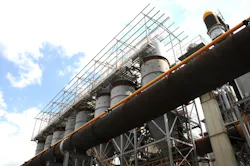
Dust collection is a clear example. Poor collection performance can affect housekeeping, worker exposure, equipment condition, and environmental control. OSHA’s guidance on combustible dust explains that combustible dusts can present fire and explosion hazards in industrial facilities, which makes dust control and housekeeping important operational concerns in environments where dust is generated.
Ventilation is another example. The American Foundry Society identifies safety and health as an area of focus for metalcasting operations, including the need to manage workplace hazards associated with foundry environments.
Structured records help supervisors and managers prioritize. They can identify assets with repeat defects, overdue corrective actions, rising repair frequency, or recurring issues in safety-sensitive areas. When time and resources are limited, history gives teams a better basis for deciding what should be addressed first.
Preparing maintenance data for AI
Artificial intelligence is beginning to influence maintenance and reliability programs across industrial operations. In foundries, AI-assisted tools may eventually help teams review inspection history, identify repeat failure patterns, compare similar assets, prioritize inspections, and flag equipment with deteriorating condition trends.
However, AI cannot compensate for poor maintenance records. If asset names are inconsistent, findings are vague, photos are not tied to the correct equipment, corrective actions are incomplete, or work history is scattered across disconnected files, advanced analytics will have limited value.
The National Institute of Standards and Technology’s AI Risk Management Framework emphasizes governance, measurement, management, and reliable context when AI systems are designed and used. For maintenance, that means AI-supported recommendations should be grounded in consistent, traceable, and operationally meaningful inspection records.
AI can help preventive maintenance programs by analyzing inspection history, asset condition, recurring defects, and corrective-action outcomes to identify risk patterns and support more informed maintenance planning.
For broader AI implementation, the same principle applies: AI is more useful when it is connected to business workflows, structured data, and specific decision points rather than treated as a standalone tool.
For foundries, the preparation work is practical. Standardize asset names. Define defect categories clearly. Attach photos to the correct equipment. Record severity and location consistently. Connect findings to corrective actions. Review whether corrective actions prevented recurrence. These steps improve maintenance decisions now and create a stronger foundation for future analytics.
Practical steps for foundry maintenance teams
Foundries do not need to redesign their entire maintenance program to make better use of inspection history. They can start with a few recurring equipment problems that already consume maintenance time.
First, select a small group of high-maintenance assets. Good starting points might include a dust collector serving a finishing area, an exhaust fan with repeated vibration findings, a cooling-water pump with recurring seal issues, a conveyor near shakeout, or a shot-blast machine with repeated wear repairs.
Second, review the last several months of inspection notes, work orders, photos, and corrective actions for those assets. Look for repeated conditions, repeated components, repeated locations, and repairs that did not prevent recurrence.
Third, standardize defect descriptions. If one technician writes “fan noise,” another writes “bearing issue,” and another writes “vibration,” the same condition may be difficult to analyze. Consistent language makes trends easier to identify.
Fourth, connect every finding to the correct asset. Work orders, inspection notes, photos, and corrective actions should remain tied to the equipment involved, not only to the department or production area.
Fifth, improve closure notes. “Fixed” or “completed” may close the work order, but it does not aid future troubleshooting. A useful closure note explains what has been done, whether the repair was verified, and whether follow-up is needed.
Finally, review repeat findings regularly with maintenance, operations, safety, and engineering. Some recurring problems are mechanical. Others involve process conditions, cleaning practices, materials, loading, ventilation, access, or equipment design. A shared history will help teams make that distinction.
From maintenance data to maintenance decisions
Foundries do not need more disconnected records. They need inspection and maintenance histories that explain what is happening to critical assets over time.
A dust collector that keeps showing airflow concerns, a fan that repeatedly develops vibration, a pump that loses performance under load, or a conveyor that requires the same adjustment every few weeks should not be viewed only as a series of completed tasks. Those records may show where maintenance labor is being consumed, where downtime risk is building, and where a deeper review could prevent the next recurring issue.
When findings, corrective actions, photos, and verification notes are connected to the asset, maintenance teams can see which issues are isolated and which are recurring. They can prioritize work based on evidence, plan repairs under more controlled conditions, and identify assets that require engineering review, inspection changes, or replacement planning.
The most useful maintenance record is not the one that simply proves work was completed. It is the one that helps the next person understand what happened, what was done, and whether the condition is likely to return.
For foundries operating under heat, abrasion, dust, vibration, and high production pressure, that understanding may make the difference between repeatedly fixing the same problem and improving the reliability of the process itself.
About the Author
Palak Sheth
Marketing Specialist
Palak Sheth is a Marketing Specialist at Konverge Digital Solutions, where she develops technical and educational content about inspection management, asset reliability, preventive maintenance, and the practical use of operational data.