High-Tech Materials Producer Switches to Induction
Key Highlights
- The switch to induction technology increased MSI's operational efficiency by up to 70%, boosting production capacity and reducing energy consumption.
- Induction melting enhances workplace safety by eliminating open flames and reducing exposure to combustion by-products, making it a safer alternative.
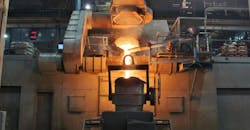
Materials Science International, a manufacturer of planar and rotary sputtering targets for thin-film deposition, last year adopted induction technologies from Inductotherm Corp. for both production and research projects, and it reports significantly improved operations by several factors. Since the switch, MSI has increased operational efficiency by up to 70%, raised production capacity, and reduced energy consumption and environmental impact.
“We’re proud to see MSI realize such significant gains from our induction systems,” stated Vincent Gallone, district manager at Inductotherm Corp. “Our technology is designed to deliver cleaner, faster, and more precise melting, and MSI’s success is a clear example of how induction can transform metal processing operations.”
Induction melting uses electromagnetic fields to heat and melt metals directly. This results in faster, cleaner, and more precise processing compared to fuel-based methods. It also enhances workplace safety by eliminating open flames and reducing exposure to combustion by-products.
For planar and rotary sputtering, melting is needed to prepare raw materials - including primary alloys like aluminum, copper, or titanium; or more complex alloys like stainless steel, brass, or zinc-aluminum; and compounds like silicon-aluminum or copper-aluminum oxide - in advance of producing sputtering targets. Some targets are produced in ceramics, too.
Planar and rotary sputtering targets are solid materials on to which are deposited thin films of various other substances (e.g., metals, alloys, ceramics) via high-energy ions in a vacuum chamber. This results in atoms being displaced from the target and then condensing on the substrate, forming a new coating.
The process is used in production of semiconductors and solar panels, among other products.
Gas-fired furnaces have long been the standard approach to melting materials used to prepare the materials, but they are energy-intensive: they require preheating and must be raised and maintained to melting temperatures. Inductotherm noted that gas furnaces also produce higher levels of emissions and have less temperature-control capabilities.