Are You Solving the Right Scrap Problem?
Key Highlights
- Contamination from rust, moisture, and improper scrap segregation impacts melt quality and increases scrap rates.
- Proper storage, preheating, and analysis of raw materials are vital to prevent internal oxidation and other defects.
- Melting practices must be carefully managed to maintain alloy chemistry and reduce inclusions.
- Furnace holding, degassing, and transfer procedures require precise control of temperature, turbulence, and atmosphere to minimize oxidation and hydrogen pickup.
- Addressing upstream issues in material handling and melting processes is essential to reduce defects and improve profitability.
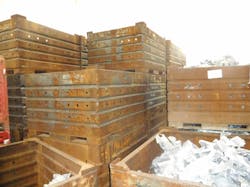
Everyone knows that scrap castings eat into metalcasting profits, but are we always looking in the right places for the root causes of scrap? Or are we simply treating the symptoms? You cannot make good castings from bad metal. It doesn’t matter how sophisticated the casting technology is. If the metal coming from the melting shop or furnace is not of the right quality, the probability of scrap or poor-quality castings increases dramatically.
The problems that show up at the casting station in many cases are created much earlier, during melting and metal handling. The starting point for quality - or trouble - is the raw material. If the charge material is metal scrap, ask:
- What is the source and is the analysis known?
- What is the level of contamination, cutting oils, oxidation, etc.?
- Are there coatings, paint, die-coat residues still present?
- Is the scrap sizing compatible with the melting furnace?
If you’re starting with ingots, ask:
- Are they filtered and certified for inclusion counts?
- How are they stored? Has oxidation or water ingress occurred?
- Ingots that show shrinkage surface may contain moisture and oxides that will transfer to melt.
- Is ingot size compatible with handling devices and melting furnace loading system.
Computer programmers say, “garbage in, garbage out,” and the same principle applies to the metal charged into the furnace.
The mix of virgin metal, internal scrap, and purchased scrap directly affects molten metal quality. Equally important is how these materials are collected, stored, and charged.
A real-world example: A state-of-the-art diecasting plant experienced elevated iron levels in structural parts. The root cause was not the furnace or the casting machine, but rusty charge bins. Even minute amounts of iron oxide rubbing off during charging were enough to push iron content out-of-specification in the structural alloys being melted and cast.
It takes very little contamination, even trace levels of unwanted elements, to disrupt the tight chemistry required for structural or safety-critical alloys. These contaminants are not burned off; they carry forward, particularly when internal scrap is recycled without proper analysis or segregation.
Parts scrapped due to inclusions may reintroduce those same inclusions into the melt. Material that due to chemistry is out-of-spec must be carefully tracked and offset when remelting - or the defect is self-replicating.
Melting and holding affect quality
Melting practices, the type of furnace, the process efficiency and heat transfer, cleaning operations and frequency, and fluxes in use are all contributing factors to scrap rates. For metal holding practices, relevant factors include holding temperatures, degassing, cleaning, duration, additives, Sr, TiBor, and fluxes.
For furnace tapping, consider the tapping process, time, turbulence, ladle condition, preheat, heel, debris, and dross heat loss.
For furnace degassing, note the time, heat loss, fluxing, vortex creation, and skim effectiveness.
For metal transfer and transport, the relevant factors include turbulence, heat loss, multiple transfers from a single ladle-temp differential.
Quality is in the details
A similar scope of detail is necessary to achieve quality results in metal processing. Thus, if the charge material is ingots (considered the most reliable charge material), improper storage in humid conditions can cause internal oxidation, sometimes externally invisible, especially in shrinkage cavities that may trap moisture. If an ingot is not preheated before charging, this can become a significant safety hazard and a contributor to melt degradation.
Be sure that suppliers are adhering to proper tagging and identification standards, and their practices line up with those of your operation.
If a foundry is charging internal casting returns, material that has been rejected for inclusions or out-of-spec analysis will perpetuate those problems. If charging internal casting scrap, ensure that it is clean and free of contaminations. If charging internal casting scrap and returns, make sure that proper controls and processes are in place to keep alloys properly segregated.
Foundries that charge external scrap must verify that the source and form match the melting furnace needs: if the scrap is too large, energy is lost and oxidation will increase. If the material is too small, permeability is reduced (especially for shaft melting.)
If the charge material consists of machining chips, these should be melted in briquette form, or via a vortex. Briquettes should be no more than 10% of dry hearth charge, or dross will increase. Briquettes for the charge well should have a density greater than 2340 kg/m³ (146 lbs/ft³) to ensure rapid immersion.
Quality practices must be practiced
Production methods also require the operators’ attention to details. For example, the melting practice must account for the furnace type and design (crucible, reverb or shaft); heat-transfer efficiency; cleaning frequency and effectiveness; and the types and use of fluxes.
Holding practices must be given comparable attention. Allowing temperature overshoot will increase oxidation, dross creation, opportunities for inclusions and increased metal loss. And allowing temperatures to fall too low can increase thermal gradients and cause heavier elements to settle, disrupting chemistry and increasing sludge development.
Degassing protocols include establishing proper atmospheric controls to minimize available oxygen, use of modifiers (e.g., Sr, TiBor), and maintaining bath cleanliness.
For metal tapping and transfer, a proper tapping technique and turbulence levels must be established; and the condition and preheat of ladles must be secured. The presence of dross, debris, or heel must be addressed. During metal transfer, operators must minimize steps and optimize routes to decrease transfer time, to reduce heat loss.
Foundries face a conundrum in managing furnace degassing: the process reduces temperature, so reducing the degassing time and increasing the holding furnace temperature to allow for this also increases hydrogen content, leading to even longer degassing times. The solution is to reduce the holding temperature and/or introduce degassing in the holding furnace.
The degassing time, temperature, and vortex management must be carefully maintained, along with coordinated fluxing and efficient skimming of the dross.
During transport and final transfer, operators must monitor for turbulence during pouring, guard against heat loss due to multiple transfers, and maintain temperature differential between ladles and baths.
Finally, the casting process must be controlled to minimize turbulence during pouring into a shot sleeve or cup. The die temperature heat and cooling must be managed, and cycle times must be maintained to preserve an optimal die temperature.
It’s easy to attribute casting defects to mold design, process parameters, or machine performance. In many cases, however, the root cause lies further upstream—in material selection, storage, melting practices, and handling.
If foundries are serious about reducing scrap and maximizing profitability, casting defects cannot be treated as isolated issues. Addressing the full metal delivery chain—from raw material to molten bath—is essential.