How Mechanical Pumps Transformed Molten Metal Handling
Key Highlights
- Mechanical pumps significantly improve heat transfer, energy efficiency, and metal quality for foundries.
- The transition from gravity-based systems to pump-driven transfer methods allows for precise control and safer operations.
- Innovations like launder transfer pumps and dosing systems reduce dross formation and enhance process safety.
- Ongoing research and new materials promise further advancements, ensuring continued progress in metalcasting technology.

Mechanical pumps were born out of physics and fluid dynamics. Some may argue that impellers are only so sexy and far from cutting edge, but spinning things on a shaft has driven many of the great innovations of the modern age. Think Kitty Hawk, and then Cleveland.
In Cleveland a young engineer named Paul Cooper began modeling a new impeller design (initially using wood) to generate flow, while confronting the realities of pumping a liquid that is extremely hot and filled with submerged solids that clog pumps and break equipment.
To note that mechanical pumps got off to a rocky start in the foundry industry is entirely accurate. When one of the earliest designs was shared with a trusted graduate school professor, the assessment was blunt: “That won’t work.”
Like all great innovators Cooper was undeterred and continued refining the design, opening the pump base aperture to allow solids to pass while still generating strong flow. Thirty years later, the impact these pumps have had on the foundry industry is indisputable - and continued innovation allows mechanical pumps to circulate, transfer, and dose molten metal, all to the benefit of overall industry performance.
The first mechanical pump application in the foundry industry was furnace circulation. In a modern reverberatory furnace, heat is applied to the metal bath from the top. Without circulation, this results in very hot metal near the surface and significantly cooler metal at the bottom. This temperature stratification impedes heat transfer and leads to inefficiencies that can substantially increase energy costs.
By circulating the metal, furnace temperature stratification within the bath is greatly reduced, and heat transfer improves, often by 20-40%. As energy represents the second-largest input cost (behind raw material) for aluminum foundries, these efficiency gains can be transformational.
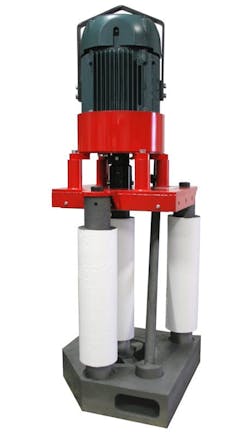
Circulation also improves alloy homogeneity, resulting in better overall metal quality. Foundries that melt their own ingots, sows, or scrap will see additional benefits in melt rate, as circulated metal behaves much like stirring ice in a cup of coffee: it accelerates the process.
In short, mechanical pump circulation delivers significant energy savings, improves metal quality, and speeds melt rates. Not so bad.
The next major innovation was to apply mechanical pump technology to moving molten aluminum from the furnace to its next point of use. Prior to this advancement, the accepted transfer method relied on gravity, tap-out plugs, and sloped troughs. While gravity is free, these systems make precise control of metal flow extremely challenging.
If the flow is too slow, the metal may freeze; too fast, and turbulence is introduced. Turbulence exposes more aluminum to air than necessary, increasing dross formation and reducing the amount of saleable metal. It also positions workers closer to the molten metal, increasing the risk of accidents. Additionally, gravity-based systems severely limit the options for foundry layouts, as metal must always move downhill.
Enter the transfer pump. Using a standard transfer pump with piping allows much greater control of metal flow, with a variable-speed drive controlling the pump motor. Depending on the height of the required lift, pump speed - and therefore metal velocity—can be adjusted accordingly.
However, piping inherently restricts flow and may introduce turbulence as the metal exits at higher velocity to overcome lift requirements.
So, let’s remove the pipe. The launder transfer pump addresses the velocity challenge by using a “chimney,” allowing molten metal to rise without the restriction of piping. This design significantly limits the aluminum’s exposure to air, with a protective surface skin forming that shields the metal beneath from oxidation. As the metal exits the chimney and enters the launder it flows quiescently to the next point of use without additional dross formation.
In our experience, this method of metal transfer can reduce dross creation by more than 50%.
The most recent innovation is to use mechanical pumps to provide liquid metal directly to the mold. The dosing pump application allows for very accurate metal delivery, generally within 1%-3% of overall shot weight. The use of mechanical dosing pumps often simplifies the metal delivery system by eliminating more costly components, and saving space as it can be a very compact system. For foundries that are ladling metal manually, this is a significant safety and cost improvement.
The transformational impact of mechanical pumps has been only a small part of the innovation that continues to lead metalcasting forward. The levels of production and gains in productivity continue to move forward as we meet ever increasing demands that will see more exciting development in the years ahead. So, some acknowledgement of what we have accomplished is appropriate but our focus is to leverage these gains for future progress.
New materials, reduced industrial water usage, emerging power technologies, and much more ensure there will be no shortage of opportunities for us to discover new ideas that “won’t work” - and turn them into new standards.
About the Author
Jeff Keller
Chairman and CEO
Jeff Keller is the chairman and CEO of Molten Metal Equipment Innovations Inc.