Energy Savings, Emissions Reduction Direct Diecasting Decisions
Key Highlights
- Global Radiatori replaced gas-fired furnaces with Westomat® dosing systems to improve metallurgical quality and reduce energy consumption by up to 30%.
- The closed, crucible-free design minimizes metal loss and impurities, for consistent melt quality for high-volume radiator production.
- Digital connectivity allows real-time data integration, allowing precise aluminum dosing based on biscuit thickness measurements, reducing waste and scrap.
- The ProDos4 control system offers intuitive operation, high accuracy, and advanced diagnostics, supporting continuous process optimization.
- The transition aligns with global trends toward electric, automated melting solutions that enhance sustainability and operational efficiency.
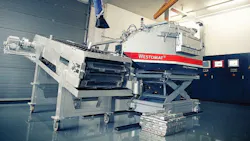
Manufacturing radiators is a multi-stage process for Global Radiatori but it’s centered on aluminum diecasting operations at Rogno, in northern Italy. Melting secondary aluminum alloys is the starting point for the company’s extensive product line, and a recent installation of a StrikoWestofen Westomat dosing furnace is confirming the manufacturer’s previous efforts to replace its gas-fired holding furnaces with Westomat dosing technology - with energy savings of up to 30%.
The new Westomat was included as part of a new, automated diecasting cell project, following two Westomat furnaces installed in 2021 that delivered immediate improvements in metallurgical performance and energy efficiency for Global Radiatori.
“It was from the beginning a great success,” recalled production manager Sandro Panteghini. “Coming from old, gas-fired holding furnaces, we immediately recognized a great step forward in metallurgical quality. At the same time we significantly reduced energy consumption and our CO₂ emissions went to zero.”
Performance drives repeat investment. For 55 years Global Radiatori has been manufacturing and supplying aluminum radiators for domestic heating, exporting around 75% of its more than 14 million radiators per year output to dozens of foreign markets. Manufacturing at that scale makes consistent melt quality and process stability critical to maintaining efficient, high-volume production.
StrikoWestofen’s Westomat furnace is a closed, crucible-free system for holding and alloying aluminum, making it efficient for diecasters and foundries to transfer precise volumes of molten metal into molds, with minimal metal loss. The sealed and pressurized chamber means the aluminum is not exposed to air, and liquid metal is drawn from the bottom of the furnace so oxides or other impurities are minimized in the casting.
After the initial installations five years ago Global Radiatori decided that all its diecasting cells would feature Westomat dosing furnaces.
Supporting that decision is the trend among diecasters to replace gas-fired holding furnaces with electric dosing and melting technologies. Electric systems can reduce energy consumption while eliminating direct combustion emissions. And for Global Radiatori, the transition to Westomat dosing technology has supported both operational efficiency and sustainability objectives.
Digitalization improves dosing accuracy. At Global Radiatori, the Westomat furnaces are digitally connected to the diecasting machine. Data from the machine’s PLC - specifically biscuit thickness measurements - is used to automatically adjust the amount of aluminum delivered with each shot. (The “biscuit” is excess metal in the injection cylinder that attaches to the part. Biscuit thickness must be carefully controlled - thick enough so that the pressure of the delivery ensures reliable solidification, but not wasting excess material.)
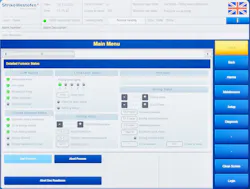
Operators report that the ProDos4 closed-loop control allows them to execute highly accurate dosing and maintain stable casting conditions, with biscuit adjustment that is intuitive and flexible. This latest generation of dosing furnace controls is standard on all new Westomat furnaces, and available as a plug-and-play upgrade for existing systems. It is designed to maximize dosing precision, minimize scrap, and simplify maintenance through advanced automation and diagnostic tools.
“The ProDos4 control system is easy to use, precise, and very flexible to our needs,” according to Panteghini. “Continuous innovation is important for us as a company, so it is good to see the technology we love evolving as well.”
With measurable savings and improved process stability in production, Westomat dosing technology is a valuable element of Global Radiatori’s modernization strategy, reducing energy consumption and emissions.