Key Highlights
- Proper segregation and labeling at the source are crucial to maintaining alloy identity and maximizing recovery value.
- Handling practices such as covered storage, drainage, and dedicated collection tools help prevent contamination and preserve material quality.
- Characterizing residual streams before processing ensures the selection of appropriate separation and treatment methods, improving recovery outcomes.
- Implementing traceability through detailed records of material movement and origin enhances economic analysis and process optimization.
- Starting with focused pilot programs on specific streams allows plants to evaluate recovery methods effectively before scaling up.
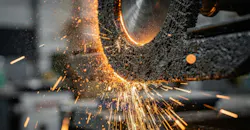
Walk through a grinding room, fettling line, or machining cell and the material collecting on the floor, in bins, or beneath the equipment rarely looks valuable. It may be wet with coolant, mixed with abrasive, or stored in a bin marked simply “scrap.” Yet it all began as an engineered alloy with a known chemistry and production history.
Once chips, swarf, and grinding sludge are mixed with other alloys or contaminants, the foundry has fewer recovery options. As the material’s identity and condition become less certain, it becomes harder for a recycler, processor, or melting operation to use it.
During 11 years of working in production technology, and furnace development at Nippon Steel, I saw the same problem many times. Usable metal lost value because its chemistry, condition, or source was no longer clear. No furnace technology can fully reverse the effects of poor handling earlier in the process.
Now, at Sun Metalon, our work starts at this boundary between residual material and usable supply. The first step is to understand where recoverable value is being lost.
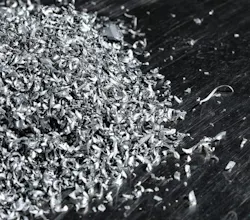
Why fines behave differently
Fines present a different recovery problem from gates, risers, and other dense returns. Their high surface-area-to-mass ratio leaves more metal exposed to oxidation and allows fluids to coat more of the material. Low bulk density can complicate storage, preparation, transportation, and furnace charging.
Chemistry is only part of the specification. Particle size, moisture, oil, abrasive content, bulk density, and physical form influence which recovery routes are practical. Valuable alloys can still be uneconomical if preparation, transportation, and contaminant disposal cost more than the recovered material is worth.
“Recoverable” is not the same as “ready for direct remelting.” Wet or oily fines require preparation appropriate to the alloy, the melting process, buyer specifications, and applicable safety requirements.
Protect identity at the source
The easiest place to preserve alloy identity is at the point of generation. After several streams enter a common hopper or sludge pit, separating them may be technically difficult or hard to justify economically.
Keeping alloy streams separate does not always require a complicated system. Plants can assign containers to specific alloy families or production cells, use durable labels or color coding, define changeover procedures, and check containers periodically. A misplaced load should be handled separately rather than blended into a well-characterized stream.
The level of segregation required depends on the plant. A foundry producing one iron grade may sort by process source or contamination risk, while a facility machining several stainless, tool steel, or nickel-based grades may need tighter controls. The objective is to prevent uncertain material from downgrading a well-characterized lot.
Control more than chemistry
Keeping material separate will not preserve its value if containers become catchalls for floor sweepings, sand, packaging, or unrelated metal. Plant teams should observe how the material is handled after it is generated. Does swarf fall into its assigned container, or is it swept from the floor? Does a conveyor discharge into a bin exposed to rain? Is grinding residue combined with spent abrasive?

Those observations can point to practical controls such as covered storage, drain-capable containers, screens, dedicated collection tools, or revised routes. Where economics justify further preparation, a plant can evaluate filtration, centrifuging, drying, densification, or external processing.
The U.S. Environmental Protection Agency notes that swarf can retain enough machining fluid to make scrap dealers reluctant to accept it. The agency identifies drainage, filtration, centrifuges, and hydroclones as possible separation methods, depending on particle size and fluid type.
The correct method begins with characterizing the stream, not selecting equipment from a brochure.
Build traceability into movement
Time and handling can make a controlled stream harder to identify and use. Labels fall off, uncovered containers collect water, and material is consolidated to free up floor space.
A collection plan should spell out where each stream goes, when containers can be combined, how long material can sit, and when material needs to be set aside or rejected. Pickup frequency should match production volume so containers do not overflow or sit indefinitely.
A basic record can capture source, alloy family, weight, fluid, contaminants, collection date, preparation and transportation costs, and price received. Procurement and operations can then compare outlets on net realized value, rather than price per ton alone.
Run a focused pilot
A plant-wide recovery initiative can become complicated quickly. It’s usually better to start with one or two streams that combine meaningful volume, known chemistry, and a visible disposal or downgrade cost.
Pilots should start with a baseline for weight, contamination, labor, transportation, disposal charges, buyer deductions, and revenue. From there, the plant can change one variable, such as segregation, drainage, storage, or pickup frequency, and evaluate the result before adding equipment or expanding the program.
The central metric is revenue or avoided material cost, minus the costs of collection, preparation, testing, transportation, and disposal. Recovery yield is important, but not in isolation. A process that interrupts production or creates excessive handling is not an effective solution.
From residual stream to supply
Electric arc furnaces (EAF) account for about 70% of U.S. steel production, increasing the importance of reliable, recycled metallics. But higher scrap demand does not make every residual stream suitable furnace feedstock. Downstream users still must control chemistry, moisture, oil, dirt, and other extraneous material.

Sun Metalon believes is that regeneration should occur closer to where metal is generated, before transportation, mixing, and contamination erase much of its value. That does not mean every stream has the same recovery path. Material may be returned internally after suitable preparation, directed to a specialized processor, or remain uneconomic to recover.
The opportunity goes beyond recovering more value from scrap. Manufacturing plants contain distributed reserves of engineered metal. If enough information and physical quality are preserved, that material can become part of a more local, traceable, and resilient supply system. This concept of localized recovery reflects Sun Metalon’s broader focus on economical, local, and sustainable metal production.
The first gains come from practical steps such as preserving identity, keeping avoidable contaminants out, documenting the material’s history, and measuring the full economics. Technology can improve recovery, but it cannot make up for material that has already been mixed, contaminated, or poorly handled. Handled well, yesterday’s waste can become tomorrow’s metal supply.
About the Author
Kazuhiko Nishioka
Co-founder and CEO
Kazuhiko “Kazu” Nishioka is co-founder and CEO of Sun Metalon and a former Nippon Steel engineer focused on advancing localized metal recovery and regeneration.