A.Y. McDonald Opens New Brass Foundry
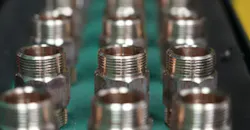
Iowa-based A.Y. McDonald Manufacturing Co. staged a ribbon-cutting event early this month to mark the opening of its new nonferrous foundry, in Dickeyville, WI. The 360,000-sq.-foot plant pouring brass castings for waterworks, plumbing, and natural-gas transmission is the result of a three-year, $340-million project.
This expansion joins a list of recent, new-capacity projects in the domestic brass casting sector, including Watts Water Technologies, Mueller Water Products, Ford Meter Box, and Clow Valve.
The 170-year-old A.Y. McDonald Manufacturing announced its news on LinkedIn, with a message emphasizing its determination to welcome employees to a safe new workspace: “Our co-workers now have a modern space with natural lighting, brand-new machines and equipment, and an entire basement designed so they don’t have to enter pits,” according to the post.
Reports from the time of the project 2023 groundbreaking indicate that the workforce strategy was not the only factor guiding A.Y. McDonald's decision to build a new operation: long-term capacity expansion and operations modernization were additional factors.
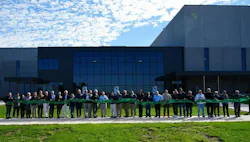
“In a time when most companies go where the best incentive packages take them, we made the commitment early on to build our next foundry where our current foundry co-workers live, and that is right here in the tri-state area,” said Rob McDonald, CEO of A.Y. McDonald Mfg. Co., in 2023.
The new foundry location is about 15 miles from A.Y. McDonald's established operation in Dubuque, IA.
The new production capabilities include automated molding to ensure more uniformity and dimensional accuracy; reduce handling; improve process control; and increase throughput.
High-efficiency electric induction melting processes brass alloys and scrap metals with tight metallurgical control. Automated charging helps to conserve thermal energy and minimize slag formation, promoting higher molten metal throughput.
Automated grinding and trimming also support high throughput, promote consistent finished products, and reduce the physical demands on foundry workers.