Market Forces Foster Something New for Foundries
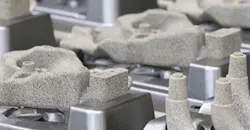
Market forces have different effects in different markets. For U.S. metalcasting operators, environmental regulations and energy costs largely determine where foundries are located, but operating costs and above all customer demand remain the decisive factors in foundries’ success. That shapes their investment strategies - such as, the type of furnace they will install or the molding process they will offer to casting buyers.
But in Europe the market forces are quite different. Operating costs and customer demand are important, of course, but the environmental regulations are much more determinative of EU foundries’ operating strategies. And because that market has regulations that promote resource recycling and reuse, and penalize carbon emissions, with customers that still require a high proportion of cast products manufactured with sand molding - the Resand Ltd. thermal treatment process for recovering spent sands from core and moldmaking operations is taking a foothold there.
European foundries may choose to invest in new coremaking and molding technologies, but their sand liabilities have to be factored too.
Resand Ltd is a Finnish technology company that offers its foundry sand regeneration technology as a service to operations, with “almost 100% recycling” of foundry sand, and with reduced CO2 emissions because the treatment is done on-site. Under thermal-mechanical treatment, the spent sand yields up clay, organic materials, and other impurities, restoring it to “near virgin” quality for reuse in coremaking and mold production.
The treatment process involves indirect heating of the sand in a controlled, oxygen-limited rotary kiln or fluidized bed reactor. Under process temperatures up to ~800°C, phenolic resins, bentonite residues, or other hydrocarbons are pyrolyzed and volatilized, combusted, so there is minimal oxidation of the sand particles.
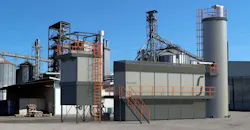
Process off-gases are captured, condensed, and recovered for use as byproducts; or, alternatively, these organics are treated in an integrated cleaning system, reducing process emissions compared to direct-fired treatment.
Treated sand is cooled and classified to reinstated grain-size distribution and surface properties.
A key feature is the closed-loop handling of off-gases: volatilized organics are captured, condensed, and either recovered as usable byproducts or treated in an integrated gas-cleaning system (often including thermal oxidation and scrubbing). This reduces emissions compared to conventional direct-fired systems. The treated sand is then cooled, dedusted, and classified to restore grain size distribution and surface properties, so it’s suitable for reuse.
According to Resand, its treatment process offers foundries an energy-efficient way to recover valuable raw materials and manage waste, reducing their environmental liability.
It was developed over the past decade, and since 2024 multiple foundries and at least one 3D sand printing service in Finland, Germany, Sweden, Spain, and Italy have contracted Resand to treat spent materials with its sand-as-a-service model. Since the start of this year, AGVS Aluminium Werke GmbH in Villingen-Schwenningen, Germany, and a Slovenian mining and industrial business called Termit d.d. have been added to the list of subscribers. The SaaS model makes it difficult to estimate how much spent sand is being treated, but it seems likely to be in a range of 25,000 to 75,000 metric tons/year. If EU market conditions continue to enforce recycling and reuse, and prioritize carbon neutrality, that estimate will rise steadily.
What need not be estimated is the emergence of a new foundry process, thermal and mechanical, not one that impacts casting quality but one that European foundries are choosing to make their operations more competitive.