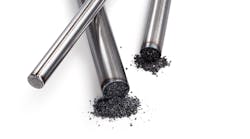
Magnesium is approximately 33% lighter than aluminum and 75% lighter than steel, making it highly attractive as a structural material for aircraft and motor vehicles, to improve fuel efficiency and extend electric vehicle (EV) ranges.
But magnesium alloys present significant challenges in industrial production. Their formability and ductility in ambient conditions are less than ideal due to a hexagonal close-packed (HCP) crystal structure. These alloys exhibit complex microstructures (e.g., twins and dislocations) that require careful heat treatment or thermomechanical processing to relieve internal stresses, control grain growth, and achieve the right balance of strength and formability. And conventional heat-treatment in a furnace can be a slow, energy-intensive process that lacks precise spatial control.
Researchers at South Korea’s Pusan National University have reported interesting results from their study of Electropulsing Treatment (EPT) of magnesium - a technique that involves applying short, high-density electrical pulses to rapidly heat and modify the materials.
Better sample, better effects
Previously, a major impediment for research into this technology was the inability to scientifically separate Joule heating (thermal effects) from the "athermal" (direct electrical/electron-wind) effects of the pulsed current. The Korean researchers developed an approach involving a "T-type specimen", allowing the researchers to isolate a single sample into areas with and without electric current at precisely the same temperature.
Prof. Taekyung Lee, of the University’s School of Mechanical Engineering, explained the novelty of their approach. “Our innovative T-type specimen methodology separates the current and heat transfer paths within a single specimen subjected to EPT. This pioneering methodology is contrasted by the conventional method that compared two different specimens: one with EPT and the other with FHT at a similar temperature. … (T)he T-type specimen methodology allows for the independent analysis of thermal and athermal effects of EPT within a single specimen.”
Their discoveries were made available online and published in the Journal of Magnesium and Alloys. They demonstrated that the electric current itself independently triggers:
- Accelerated, strain-induced boundary migration and rapid grain growth.
- Efficient twin boundary removal and dislocation annihilation.
- Pronounced softening beyond what thermal conduction alone could achieve.
Relevance for lightweight castings
By proving that athermal effects exist and can be isolated, this research lays the scientific groundwork for electrically assisted forming and heat treatment. For lightweight casting components (e.g., automotive/EV structural diecastings), EPT can potentially replace industrial furnace thermal treatment with localized (and fast) electrical treatment.
Conventional furnace heat-treatment requires large thermal mass, long ramp-up times, and extensive cooling periods. Electropulsing would be comparatively instantaneous. For high-volume manufacturing of lightweight castings, EPT-based processing could reduce heat-treating cycle times from hours to minutes (or even seconds) and significantly cut the operator’s energy requirements and carbon footprint.
Cast components often present microstructural inconsistencies, residual stresses, and defects. If EPT could quickly remove dislocations, control grain size, and eliminate undesirable low-angle grain boundaries, then diecasters or foundries could dynamically tune local mechanical properties, and thereby make lightweight castings tougher, more ductile, and more reliable under structural load.
Past attempts to optimize EPT were beset by high experimental error, but by providing a standardized specimen measurement the Pusan National University study gives metallurgists and foundry engineers a tool for engineering better magnesium casting protocols systematically.
The results of the study represent primarily a materials science development, but the downstream prospect may be greater potential for magnesium structural castings, with a fast, energy-efficient manufacturing technique.